
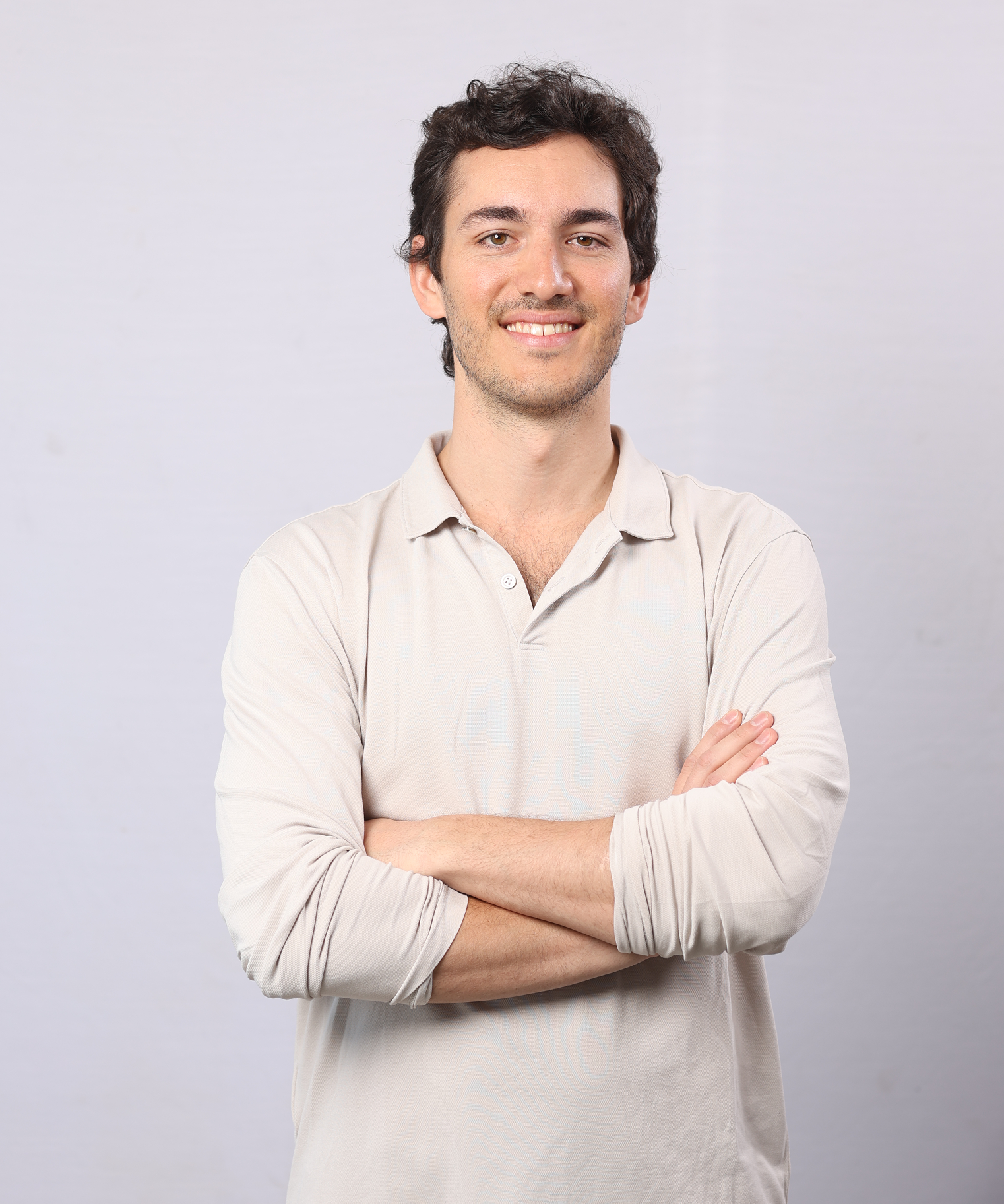
.avif)
Rice feeds nearly half the world's population, and accounts for roughly 12% of global methane emissions. Yet for too long, it has remained structurally excluded from climate finance, considered too fragmented, too dispersed, and too difficult to measure at smallholder scale.
Mitti Labs, a deeptech company leveraging AI, satellite technology, and field operations to permanently reduce methane emissions from rice farming, is working to change that. Ahead of Carbon Unbound East Coast, we spoke with Xavier Laguarta, Co-Founder of Mitti Labs, on two fronts: the partnership with Cool Effect that is bringing high-integrity rice methane credits to global buyers, and the launch of Beyond CO₂, a new platform designed to accelerate corporate engagement with superpollutant abatement.
Part 1: Mitti Labs and Cool Effect Partnership
What does this partnership between Mitti Labs and Cool Effect unlock in terms of impact?
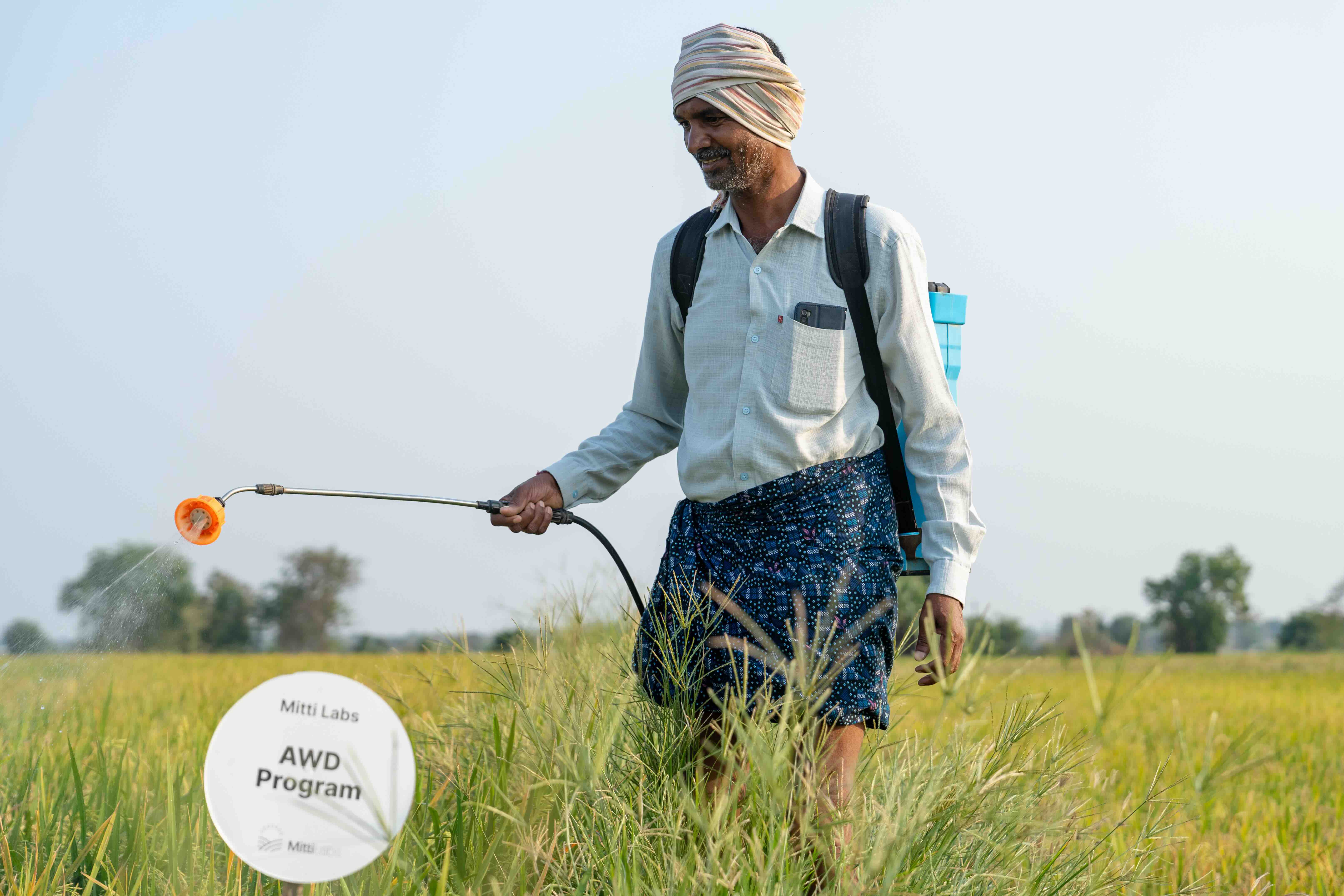
It unlocks three things simultaneously: climate, water, and farmer livelihoods — at scale. On the climate side, Mitti Labs' AWD methodology can cut methane emissions from rice farming by up to 50%, and with plans to reach 2 million credits issued annually by 2028, the volumes are meaningful. On water, the partnership is projected to conserve an estimated 25 billion liters in water-stressed regions of India. And for the 70,000+ smallholder farmers already enrolled, carbon credit revenue creates a direct financial incentive to maintain the practice — turning climate action into an income stream rather than a cost. What the partnership specifically unlocks is distribution: Cool Effect's global network of corporate and individual buyers gives Mitti Labs' credits market access they couldn't build alone.
Why is this the right collaboration to transform outcomes for smallholder farmers in India?
Because it pairs credibility with reach. Cool Effect has spent over a decade building buyer trust — since its launch at COP21 in Paris in 2015, it has directed over $84 million to project partners and retired over ten million tonnes. Between 2024 and 2025 alone, it sent more than $36 million directly to superpollutant project partners. That track record matters enormously for smallholder farmers, whose livelihoods depend on the carbon market actually paying out — and paying consistently. Mitti Labs brings the ground-level infrastructure (operations across six Indian states, in-situ measurement, farmer enrollment at scale), while Cool Effect brings the buyer relationships and nonprofit credibility that make long-term credit offtake viable. Neither could deliver the farmer's outcome alone.
What gap in the carbon removal ecosystem does this partnership fill?
It opens up a category — rice methane — that the market has known about but hasn't been able to credibly access. Rice farming accounts for roughly 12% of global methane emissions and is farmed across 150 million hectares in Asia, yet it has remained largely outside the VCM because MRV at smallholder scale was considered too difficult and too expensive. Mitti Labs' NASA-supported, soil-to-sky dMRV platform changes that: it can monitor plots under 1 hectare in near real-time, making the credit generation credible and the Isometric verification possible. Cool Effect's addition of rice methane as a third superpollutant category — alongside ODS and landfill gas — signals to the broader market that this project type has cleared the integrity bar. That's a gap-filling signal, not just a transaction.
What problem is Mitti Labs tackling that existing climate solutions have failed to solve?
The core problem is that rice — a crop feeding nearly half the world's population — has been structurally excluded from climate finance, despite being a major emissions source. Traditional flooding practices make rice farming responsible for ~12% of global methane output and ~30% of global freshwater consumption. Existing climate solutions either ignored agriculture entirely or focused on easier-to-measure interventions in wealthier farming contexts. Mitti Labs tackles the specific combination of factors that made rice methane hard: smallholder plot fragmentation (fields under 1 hectare), remote and dispersed geography, and the need to incentivize practice change without compromising yields. AWD reduces both methane and water use without yield loss — which is what makes farmer adoption viable rather than coercive.

How could this partnership evolve, and what bigger opportunity could it unlock next?
Mitti Labs aims to issue 2 million credits annually by 2028 as the near-term target, but the structural opportunity is much larger. Rice farming spans 150 million hectares across Asia — India is the proof of concept, not the ceiling. If Mitti Labs' dMRV model is exportable (and the satellite-based architecture suggests it is), the same approach could be applied across Southeast Asia, where rice cultivation follows similar patterns. For Cool Effect, a scalable, high-integrity rice methane supply would allow it to deepen its superpollutant portfolio well beyond current volumes and offer buyers a credible agricultural category alongside its industrial gas projects. The bigger unlock is positioning rice as a mainstream VCM category — which would require this partnership to keep performing, keep issuing high-quality credits, and keep demonstrating that smallholder-scale dMRV works in practice.
Part 2: Beyond CO₂
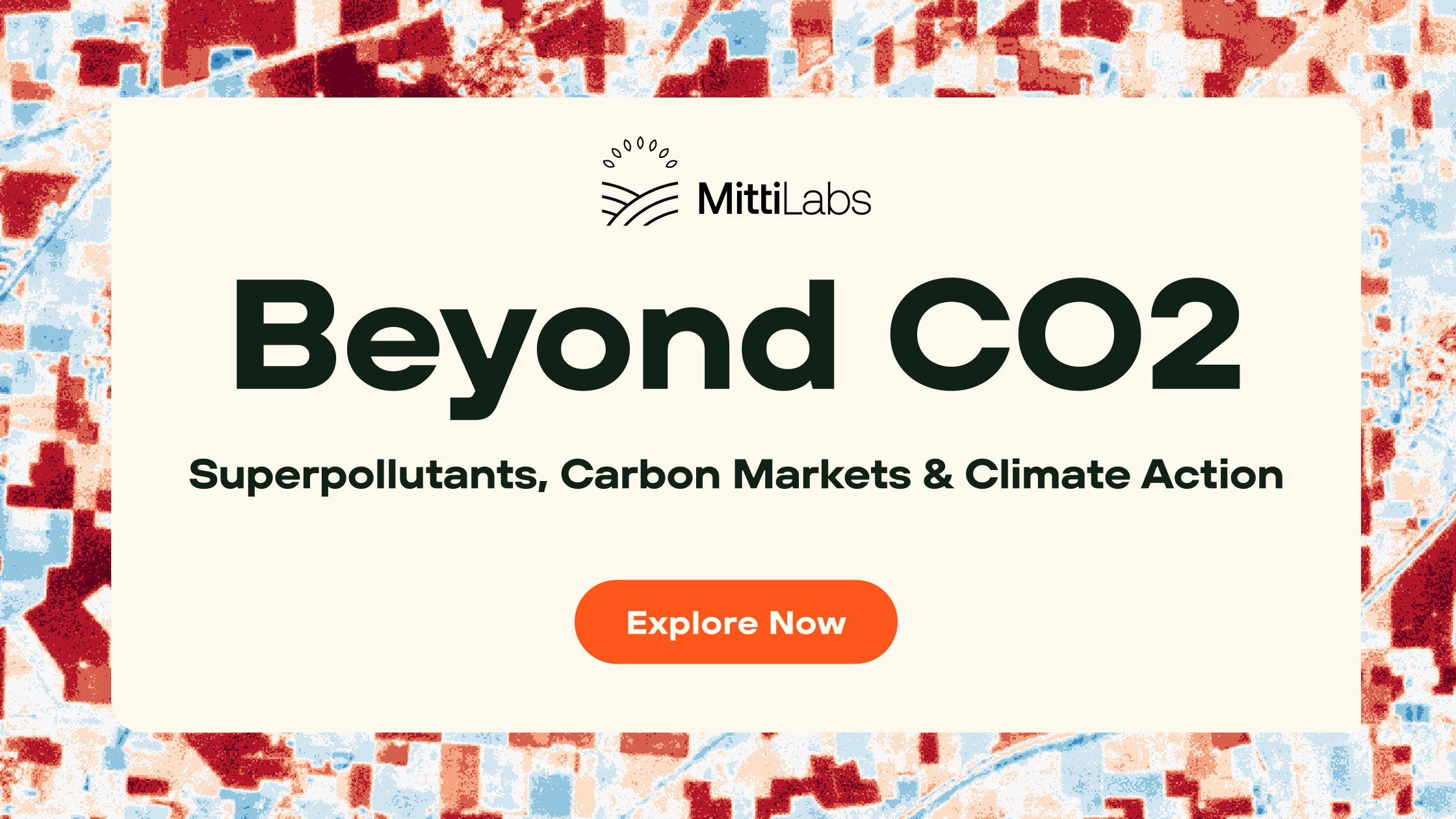
Superpollutants account for nearly half of today's observed warming, yet methane mitigation represents less than 1% of voluntary carbon market activity. Beyond CO₂ is Mitti Labs' response to that gap: a platform designed to give corporate buyers, sustainability teams, and climate professionals the grounding they need to engage with superpollutant credits confidently and at scale. Explore Beyond CO₂ now.
What specific weakness or gap in superpollutant abatement markets is this platform designed to address?
The core gap is the disconnect between scientific urgency and market readiness. Superpollutants account for nearly half today's observed warming, yet methane mitigation represents less than 1% of VCM activity and less than 5% of all climate finance funding. The market isn't failing because the credits don't exist or aren't high-quality: Of the more than 1,000 carbon credits rated by Calyx Global, approximately 40% of superpollutant credits fall into the top tier — AAA, AA, or A — compared to just 1% of non-superpollutant credits.
The failure is one of awareness and understanding: corporate buyers, sustainability teams, and investors don't yet have the conceptual grounding to evaluate, compare, or prioritize these superpollutant credits. Beyond CO₂ is designed to close that knowledge gap and make the market legible to the people who could activate it. It is a ‘’jumping board’’ into super pollutants for carbon experts, non-experts, CDR buyers and sustainability professionals in general.
Why is this moment critical for launching a platform that combines education with market-building action?
Several things are converging right now: integrity infrastructure has matured (ICVCM labels, Isometric certifications, improved dMRV technology like satellite monitoring), available credit volumes have grown and early movers like Google, JPMorganChase, Netflix, and Workday have started integrating superpollutant credits into their offset strategies. At the same time, the science community is pushing for better accounting frameworks and portfolio structures like CDR pairing which help offset buyers have both a near and long term impact.
Who is this platform primarily designed for, and how does it change what they're able to do in practice?
The primary audience is corporate sustainability and ESG teams — people who are already committed to climate action but haven't yet engaged with non-CO₂ abatement. In practice, Beyond CO₂ gives them what they currently lack: a clear framework for understanding superpollutant types (methane, HFCs, N₂O), how credits are verified, how to evaluate quality, and how these assets complement — rather than compete with — their existing CDR portfolios. It moves them from passive awareness to informed buyers.
How does the platform aim to convert awareness into tangible market participation or investment?
The platform anchors education in real data, real project types (AWD, landfill gas, ODS), and real verification frameworks — so when a reader finishes engaging with the content, they're not just informed in the abstract, they have enough grounding to take a next step: request a conversation with a project developer, evaluate a credit purchase, and generally keep building on their knowledge.
What would meaningful success look like for this platform over the next 12–24 months in terms of impact?
We want this platform to continue evolving as new information becomes available on the market for superpollutant credits: new technologies, project types, purchases, etc…our hope is that players in the ecosystem get in touch to share their views and input on how to make this ‘’jumping board’’ even better.
Xavier Laguarta will be joining us at Carbon Unbound East Coast on 19 & 20 May in New York. Book your ticket now.

.png)
